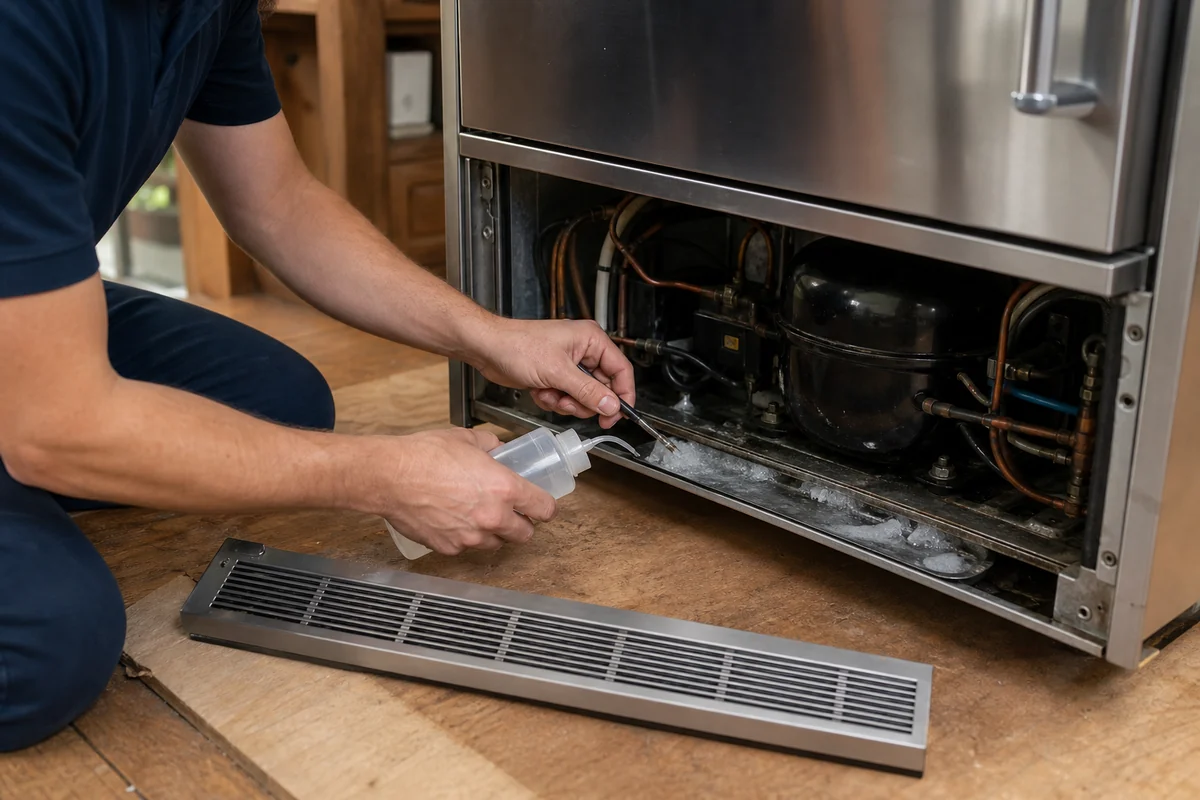
Model 550
The 36-inch over-under, built 1987–1996. Clogged defrost drains and tired cold controls are its usual complaints.
The 550 repair notesVintage Sub-Zero · the roster
Three families of machine come through our doors more than all the rest combined. Each fails in ways we have seen a hundred times, and each has its own page below.
Sub-Zero Repair Ortega restores vintage Sub-Zero® refrigerators — the 500 series (550, 561, 532) and the 600 series (632, 642, 650, 661) — for Ortega, Avondale, and Riverside, ZIP 32210. Reach the bench at (904) 893-3248, Tuesday through Saturday, or book online. Most legacy repairs run $550 to $3,000.
For vintage Sub-Zero repair in Ortega, Avondale, and Riverside, call the shop at (904) 893-3248 or Book online .
Updated June 13, 2026.
(904) 893-3248 · Tue–Sat · 8:00 am–6:00 pm · you reach the bench, not a call center
On the bench
The 36-inch over-under, built 1987–1996. Clogged defrost drains and tired cold controls are its usual complaints.
The 550 repair notes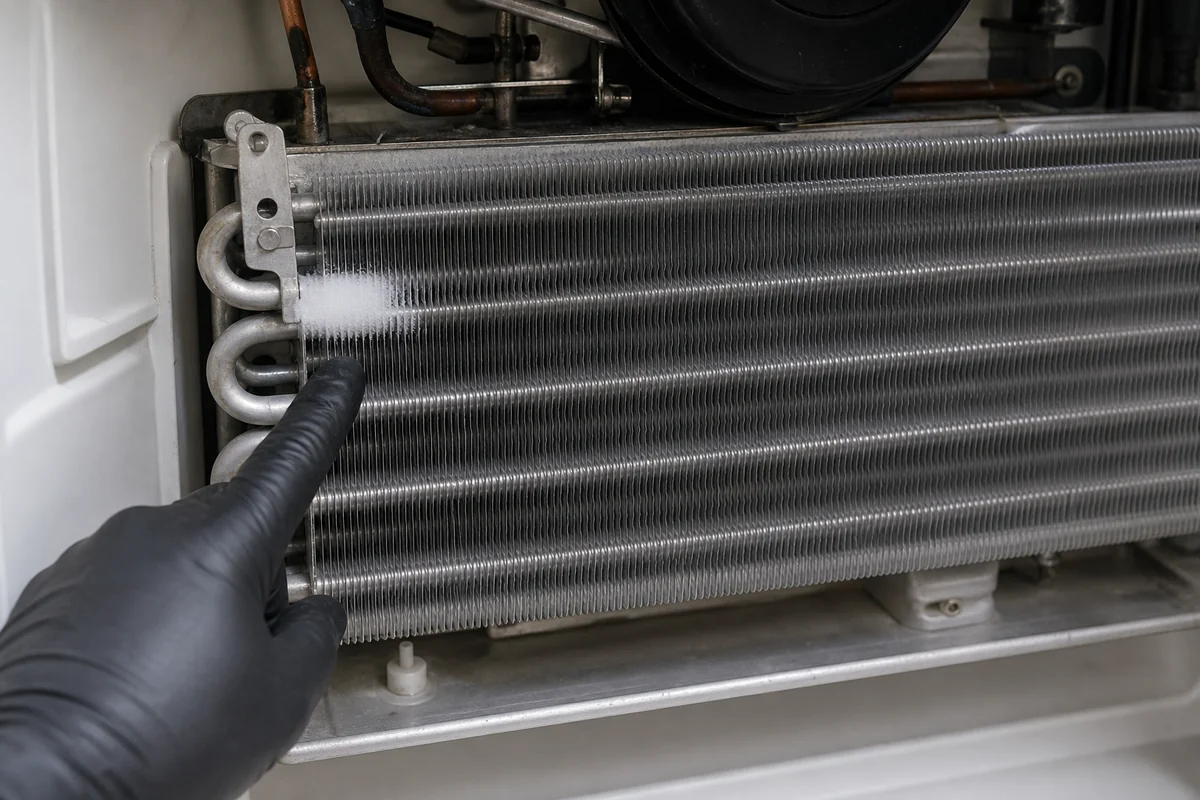
The bottom-mount that ran to 2003. Its signature weakness is a fridge-side evaporator leak — a short frost stripe gives it away.
Diagnosing the 561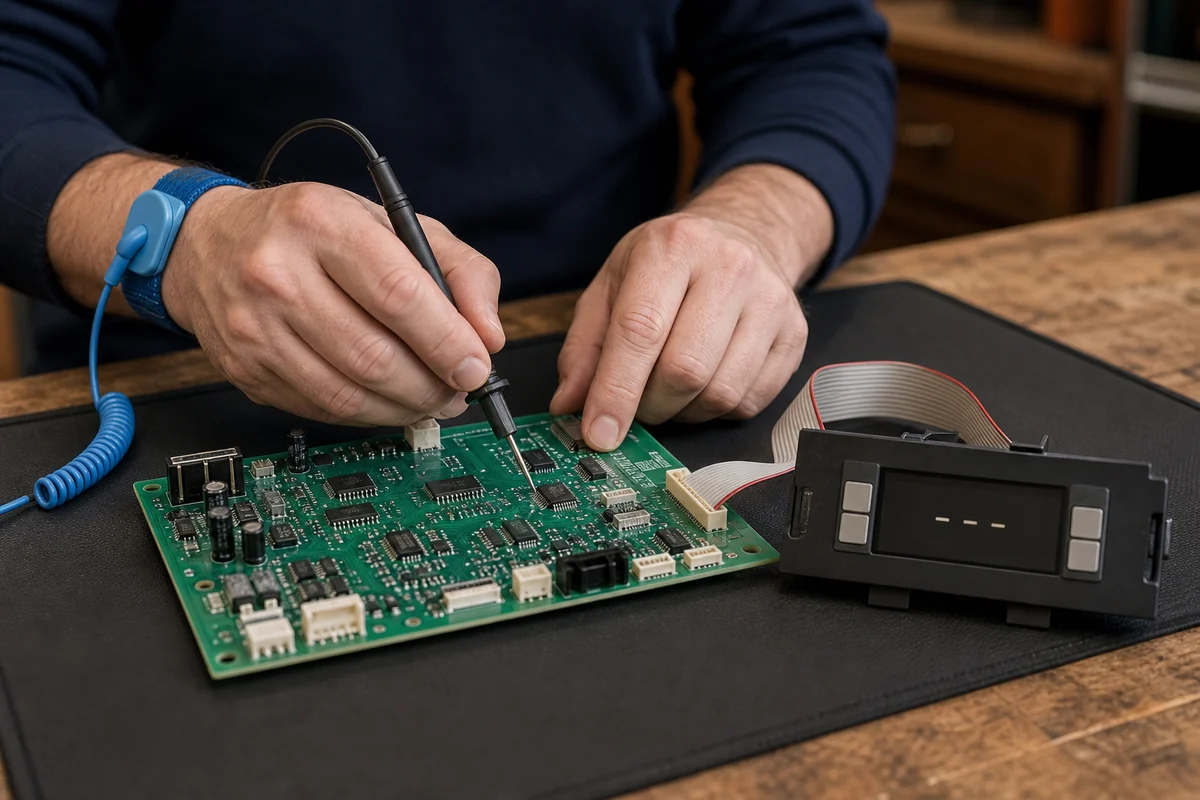
Built 1996–2009 across three electronic generations. Double dashes on the display mean the board’s EEPROM has let go.
600 series guideThe temptation with old refrigerators is to treat them as interchangeable. They are not. A part that fits a 632 may not fit a 650 or 661; the 600 series alone spans three electronic generations with different boards. Knowing which machine is in front of us — from the serial number, not a guess — is half of doing the job once instead of twice.
| Family | Years built | Signature failure | Typical repair range |
|---|---|---|---|
| 500 series — 550 | 1987–1996 | Defrost drain icing, cold control | $550–$1,100 |
| 500 series — 561 | 1987–2003 | Fridge-side evaporator leak | $1,500–$3,000 |
| 500 series — 532 | 1987–1996 | Sealed-system, heat exchanger | $1,500–$3,000 |
| 600 series | 1996–2009 | Control board EEPROM, thermistors | $550–$1,100 |
| Any vintage unit | — | Compressor replacement | $1,000–$2,000 |
Every vintage family leaves a fingerprint — one symptom that points us at it before a tool comes out. Reading that tell over the phone is how we tell an owner whether a visit is worth their money.
| Family | Diagnostic tell | Usual cause |
|---|---|---|
| 550 over-under | Ice sheet under the crispers | Defrost drain iced shut after thousands of cycles |
| 561 bottom-mount | Warm fridge over a perfectly cold freezer | Fridge-side evaporator refrigerant leak |
| 532 / 542 side-by-side | Both sides slowly losing ground | Aging sealed system or heat exchanger |
| 600 series | Double dashes “--” on the display | Failed control-board EEPROM, often post-surge |
The over-under file covers the 550 defrost fix in detail, while a unit that never cycles off gets a longer read in its own diagnosis note.
The case for keeping a classic is not sentiment — it is arithmetic, and it shifts by family. Replacing a built-in means buying the machine, installing it, and often altering the surrounding millwork; the repair figures below assume none of that.
| Family | Worst-case repair | Replace & reinstall |
|---|---|---|
| 532 side-by-side (sealed system) | ~$2,500 evaporator & heat exchanger | ~$14,000 unit, install, cabinetry |
| 561 (fridge-side evaporator) | $1,500–$3,000 rebuild | ~$14,000 panel-front replacement |
| 550 (mechanical faults) | $550–$1,100 typical | Replacement rarely justified |
| 600 series (board + sensors) | $550–$1,100, board stock permitting | Replacement only if boards are unobtainable |
When the numbers genuinely favor replacement — usually a scarce board with no rebuilt exchange left — we say so. The full decision framework lives in our preservation shop notes, and the deepest jobs run through sealed-system repair.
The 500 series (1987–2003) and the 600 series (1996–2009) are the heart of the shop — the 550 over-under, the 561 bottom-mount, and the 600 family of side-by-sides and over-unders. We also take out-of-warranty built-ins of later generations, but the classics are where decades of pattern recognition pay off. We keep the common parts for them on the shelf.
Look for the data plate inside the refrigerator compartment, usually along the upper side wall or on the ceiling near the front. It lists the model and serial number. On the 600 series the serial number also tells us which of the three electronic generations you have, which decides whether a board is current stock or a rebuilt exchange. Read it to us when you call.
For most jobs, yes. Gaskets, cold controls, fan motors, relays, thermistors, and compatible compressors are still obtainable for the 500 and 600 series. The scarce items are certain 600 series control boards, which sometimes exist only as rebuilt exchanges. We confirm availability during diagnosis, before you commit to anything.
Usually it is, both mechanically and financially. These cabinets were built to be rebuilt, and a sealed-system repair runs a fraction of replacing a built-in and rebuilding the cabinetry around it. Behind the irreplaceable panel fronts common in Ortega and Avondale, the case for keeping the original is even stronger. Our shop notes lay out exactly when it is — and is not — worth the money.
Yes. The 532 (48-inch) and 542 (42-inch) side-by-sides from the 1987–1996 run come through regularly, and the sealed-system math on them is some of the strongest we see: a 532 takes a new evaporator and heat exchanger for around $2,500 against roughly $14,000 to replace. They share much of the 500 series parts catalog, and we keep the common pieces stocked.
Sub-Zero split the 600 series at serial breaks — the early 600-1 (before serial #1810000), then the 600-2 and 600-3. Each generation carries a different control board, so the right part for an early 632 will not run a later 650 or 661. We read the serial plate first because that number, not the model alone, decides whether a board is current stock or a rebuilt exchange.
The 550 over-under, by a comfortable margin. Its faults are mechanical and predictable — defrost drains, cold controls, fan motors — with no scarce electronics to chase, and parts remain widely available. The 561 is also durable once its known evaporator weakness is properly addressed. The 600 series is the most capable but the most board-dependent of the three.
Bring us the machine everyone else gave up on.
The shop answers Tuesday through Saturday, eight to six. One visit, a straight diagnosis, and a firm number before any work begins.